Foundations of Master Data Management
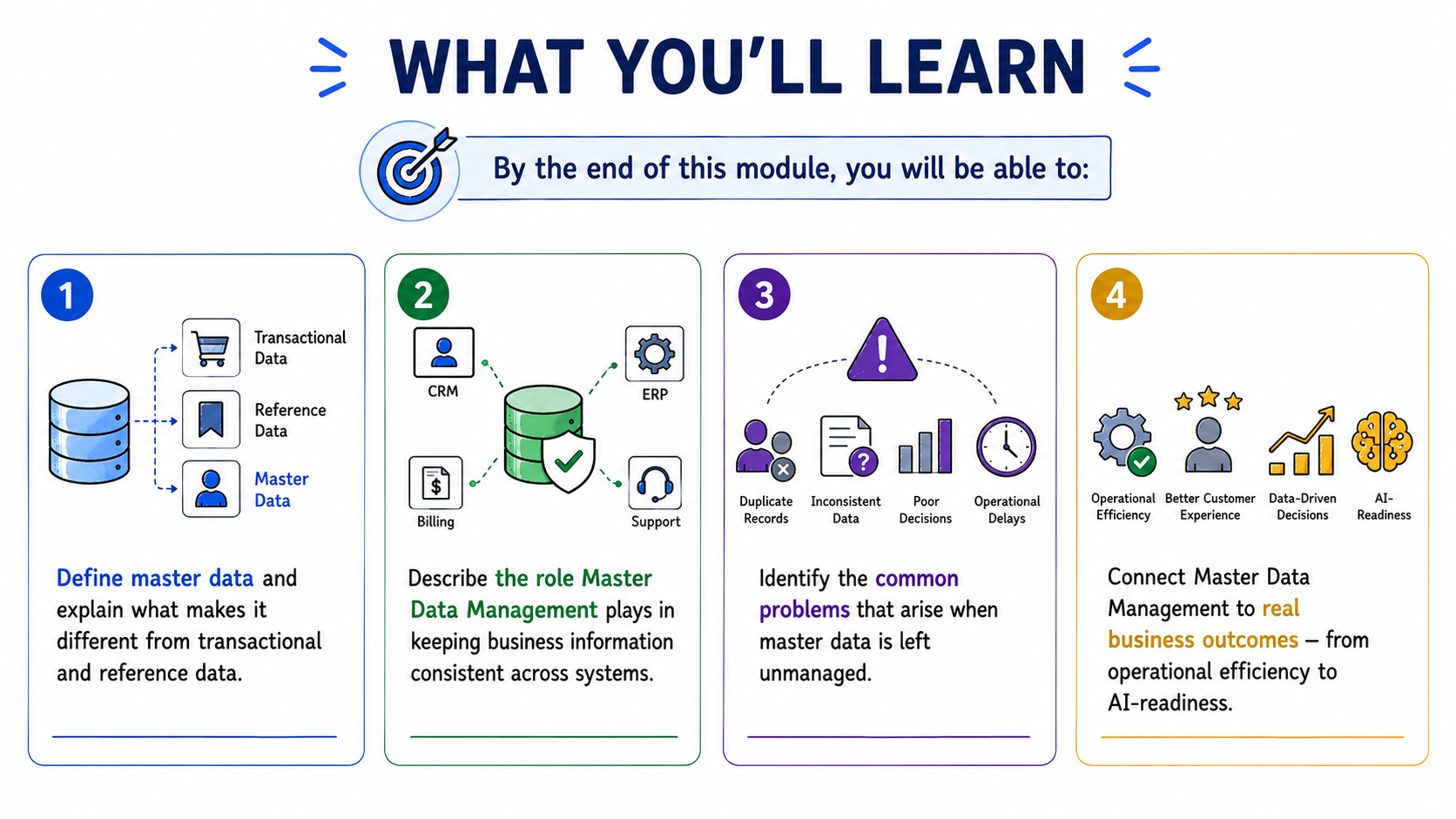
In brief: This opening module establishes the foundation for the rest of the course. You will learn what master data is, how it differs from other enterprise data, why organizations struggle when it is unmanaged, and how Master Data Management creates trusted information that supports operations, reporting, and AI.
Introduction to Module
Module support notes
This opening module establishes the foundation for the rest of the course. You will learn what master data is, how it differs from other enterprise data, why organizations struggle when it is unmanaged, and how Master Data Management creates trusted information that supports operations, reporting, and AI.
In This Module
You will move from definition to business impact: first understanding the role of master data, then seeing how governance, consistency, and stewardship turn scattered records into a trusted business asset.
Why this module matters
Most organizations depend on shared business entities such as customers, products, suppliers, employees, and locations. When these records are inconsistent across systems, every downstream process becomes harder: orders fail, reports conflict, service teams lose context, and analytics become less reliable. Master Data Management exists to solve that problem at the root.
Tip
As you go through Module 1, think of one real business record in your organization that appears in multiple systems. That single example will make the concepts in this module easier to connect to practical MDM work.
Warning
A common mistake is to treat all enterprise data the same. This module is important because master data, transactional data, and reference data serve different purposes, and confusing them leads to poor governance decisions later.
Lesson progress
0% watched